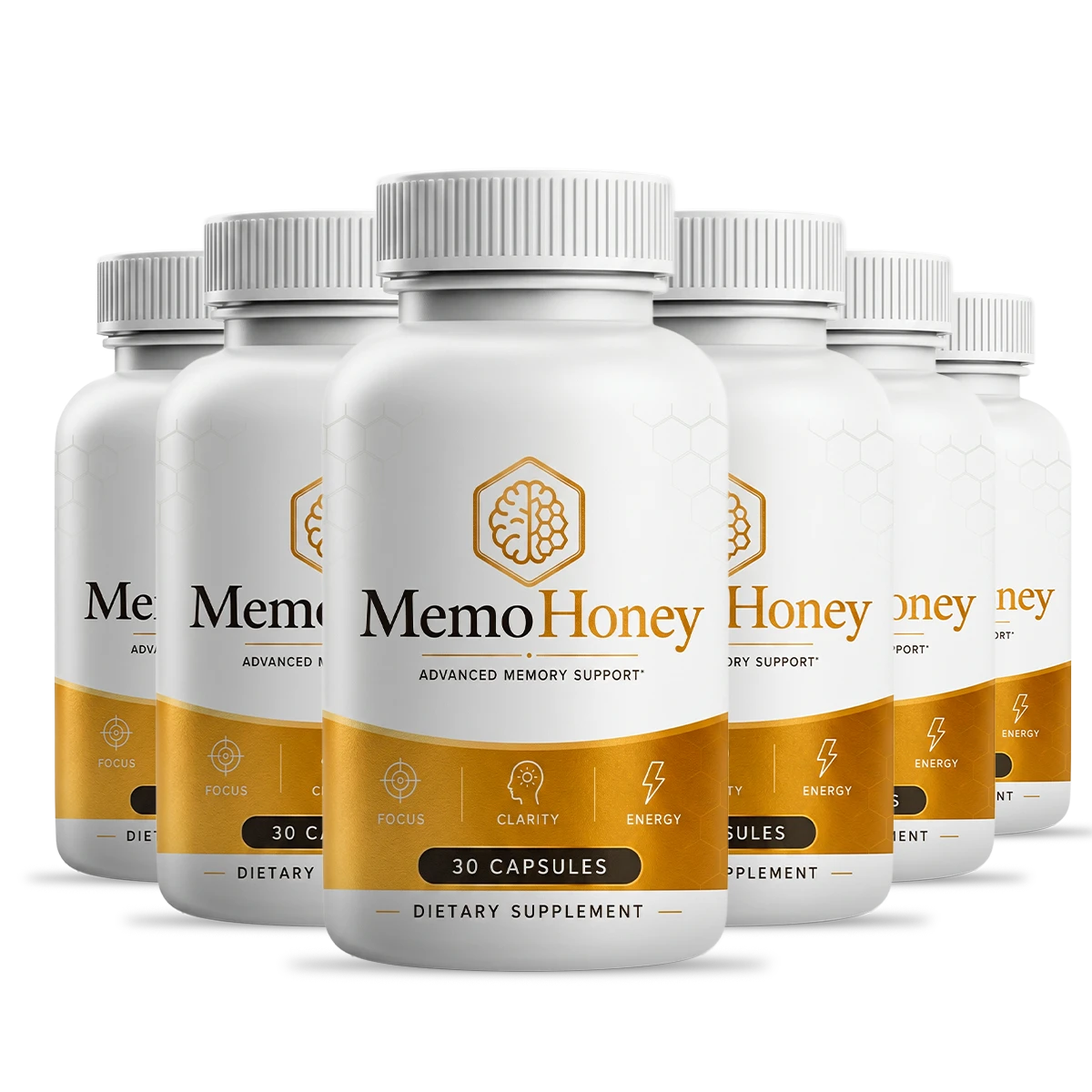
Written & reviewed by MemoHoney Reviews Editorial Team Updated July 2026 Affiliate disclosure — we earn a commission on qualifying purchases
Home/Ingredients
MemoHoney

MemoHoney Ingredients

All four actives with research dosages, standardisation requirements, honest evidence grades and the drug interactions worth knowing before you order.

Below is every active ingredient MemoHoney lists, with the dosages and standardisations used in published research, an honest evidence grade, and the safety notes that matter. Where the evidence is weaker than the marketing implies, we say so.

The gap that governs this page. MemoHoney publishes neither per-ingredient milligram amounts nor standardisation percentages. For botanical extracts, both are required to make any comparison against research. Three hundred milligrams of Bacopa standardised to 50% bacosides and 300 mg of unstandardised Bacopa powder are different products at the same weight — potentially by an order of magnitude in active content.

Bacopa Monnieri

Research dosage: 300–450 mg daily, standardised to roughly 50% bacosides.
Time to effect: 8–12 weeks.
Evidence grade: Good — the strongest memory evidence in this formula, and among the strongest of any herbal nootropic.

A creeping herb used in Ayurvedic medicine for centuries, traditionally associated with memory and learning. Modern research has been reasonably kind to that traditional use.

Multiple randomised, placebo-controlled trials in healthy adults have examined Bacopa against cognitive test batteries, and meta-analyses have found modest but consistent improvements — chiefly in delayed recall of learned information rather than in general intelligence or processing speed. The published trial literature is worth reading directly.

Two things that determine whether it works for you:

  • Standardisation. Research uses extract standardised for bacoside content. This is the single most important variable and the one most often omitted from labels.
  • Duration. Trials measure at 8 to 12 weeks. Almost nobody takes a supplement that long without a reason to persist, which is why most people conclude Bacopa does nothing.

Side effect note: stomach upset, cramping and nausea are common on an empty stomach and largely resolve when taken with food. The product directs morning use; take it with breakfast, not before. Full article →

Rhodiola Rosea

Research dosage: 200–600 mg daily, standardised to 3% rosavins and 1% salidroside.
Time to effect: days to a few weeks.
Evidence grade: Moderate — good for fatigue, weak for memory.

An arctic adaptogen with a genuine research base, though for a different outcome than this product's name implies. Trials have examined mental fatigue and stress-related performance in physicians on night duty, students during examinations and shift workers, generally finding reductions in fatigue and improved stress-related performance. The NCCIH overview is a good neutral summary.

What the evidence does not support is a direct effect on memory formation. Rhodiola helps you think when you are tired; it does not appear to help you remember.

Safety notes: can be overstimulating, particularly taken later in the day. May interact with antidepressants including MAOIs and SSRIs. Caution in bipolar disorder, where stimulating adaptogens can be destabilising. Full article →

L-Theanine

Research dosage: 100–200 mg.
Time to effect: 30–60 minutes.
Evidence grade: Good for calm alertness; the attention evidence depends on caffeine.

An amino acid found almost exclusively in tea leaves, and one of the best-characterised compounds in the nootropic space. It crosses the blood-brain barrier and increases alpha wave activity, producing relaxed alertness without sedation. This is measurable on EEG and reliably reported.

The qualification that matters: most research showing improved attention, reaction time and task accuracy used L-theanine combined with caffeine. That combination is genuinely well supported — theanine appears to smooth caffeine's jitteriness while the two together improve focus more than either alone.

On its own, L-theanine's better-evidenced effects are reduced anxiety and subjective calm. Those are worthwhile, and they are not the same as sharpened cognition. MemoHoney does not appear to contain a caffeine source, which means the ingredient is present without its best-evidenced partner. Full article →

Panax Ginseng

Research dosage: 200–400 mg daily of standardised root extract.
Evidence grade: Limited and inconsistent for cognition.

One of the most studied botanicals in existence, with genuinely mixed cognitive results. Some trials report short-term improvements in working memory and reaction time; others find no effect. Heterogeneity between preparations is a major complicating factor — species, plant part, age at harvest, processing method and standardisation all vary substantially between products and studies.

Its more consistent findings relate to fatigue and general vitality rather than to memory.

Interaction notes — the most significant in this formula:

  • Warfarin — ginseng may reduce its anticoagulant effect. Clinically significant.
  • Diabetes medication — may lower blood glucose, additive with existing treatment.
  • Sleep — can be stimulating; insomnia is the most commonly reported side effect.
  • Hormone-sensitive conditions — some ginsenosides have oestrogenic activity.

Full article →

What is not in it

Worth noting, because absences are informative too:

  • No caffeine — which means L-theanine is present without its best-evidenced partner, though it also means no stimulant crash and no sleep disruption from that source.
  • No citicoline, alpha-GPC or huperzine A — three of the more commonly used cholinergic nootropics. Their absence is neither good nor bad, but it does mean this formula's memory claim rests entirely on Bacopa.
  • No omega-3 — which has more consistent long-term cognitive research behind it than most of what is here, though at gram-level doses that would not fit in a capsule alongside four other ingredients.

What we would ask before ordering

Three questions to customer support, none of which reveal a proprietary formula:

  1. What are the milligram amounts of each ingredient per capsule?
  2. What is the Bacopa extract standardised to — what bacoside percentage?
  3. What is the Rhodiola standardised to — rosavins and salidroside percentages?

A company confident in its sourcing answers all three. How they respond tells you a great deal, and it costs one email before spending anything.

Check current pricing and packages

All package options and the 60-day guarantee at the official checkout.

Check Current Price

MemoHoney — memory & focus capsules · 60-day money-back guarantee

Check Current Price